| The Culinary Institute of Foraged Ingredients: An Architecture Measured out of a Meal | Bologna, Italy | Unit 21 | 2026 |
| To forage is to read a landscape, to negotiate what is visible against what stays hidden, to weigh the instinct to search against the decision to commit. Bologna already moves this way beneath its portici, the covered passages that order the city between inside and outside. A series of walks through this network was recorded and reconstructed through spatial processing into precise movement paths, then used to train a pathfinding logic that could be re-run on other ground. The portico becomes less a structure than a way of moving, one that can be carried elsewhere. It is carried to Villa Ghigi, a hillside park on the city’s edge and a former estate whose order has quietly collapsed, its paths faded along with its fields. What the site has lost, the city lends its navigational behaviour. The building is then measured from a single plate of Bolognese, the meal that concluded a day of foraging in the city, scanned and resolved into the smallest spaces in which the dish can be made: a burner, a counter, a sink, a place to eat. The recorded movement threads these into ten foraged rooms along a route of covered and open ground. The building is the portico, re-learned. A foraged architecture for the making of Bolognese. |
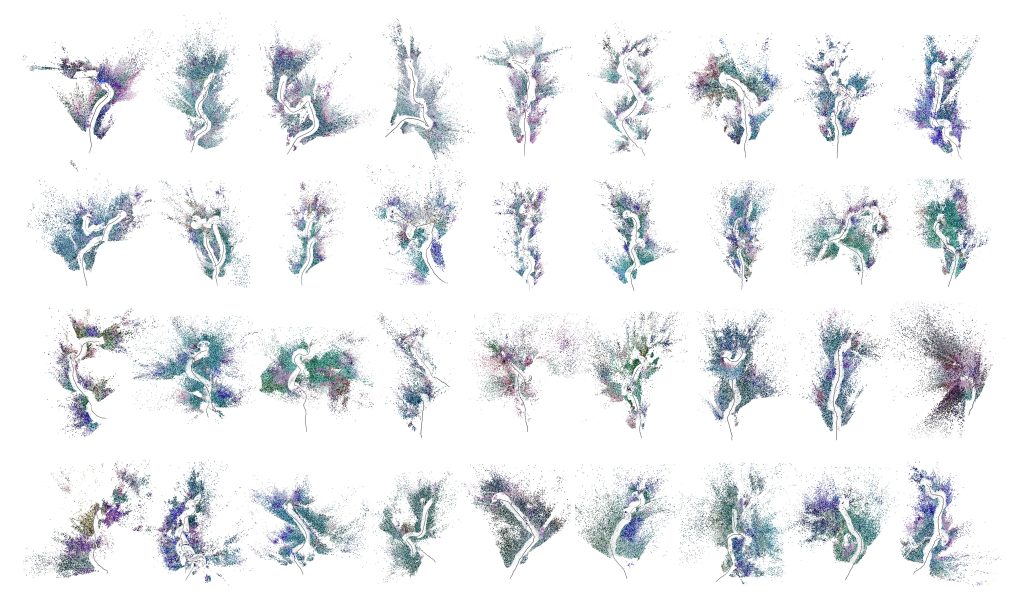
Foraging Catalogue A series of 36 motion-extracted foraging scans in Epping Forest, processed through SfM (Structure-from-Motion) scripts to convert the recorded searching into measurable data. |
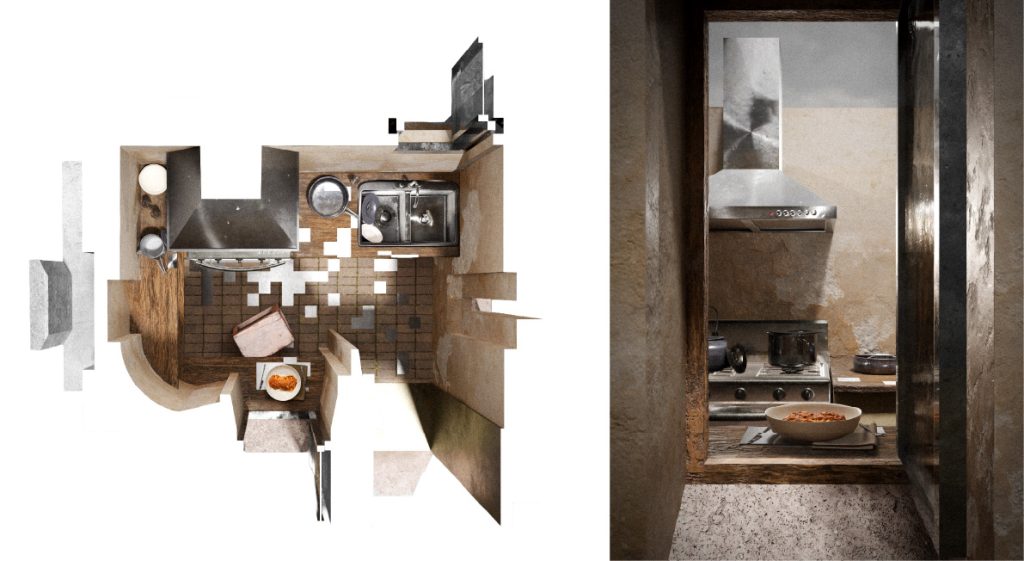
The Bolognese Microkitchen The minimum volume required for a space to cook a single plate of Bolognese. This acts as the spatial unit that dictates the masterplan’s scale, measured from a single serving. |
Spaces within the Bolognese Culinary Institute Scaled from the microkitchen as a spatial unit of measurement, the 10-building masterplan derives its materiality from its selected position within the Bolognese point cloud, and creates scattered spaces to teach, to eat, and to cook. |
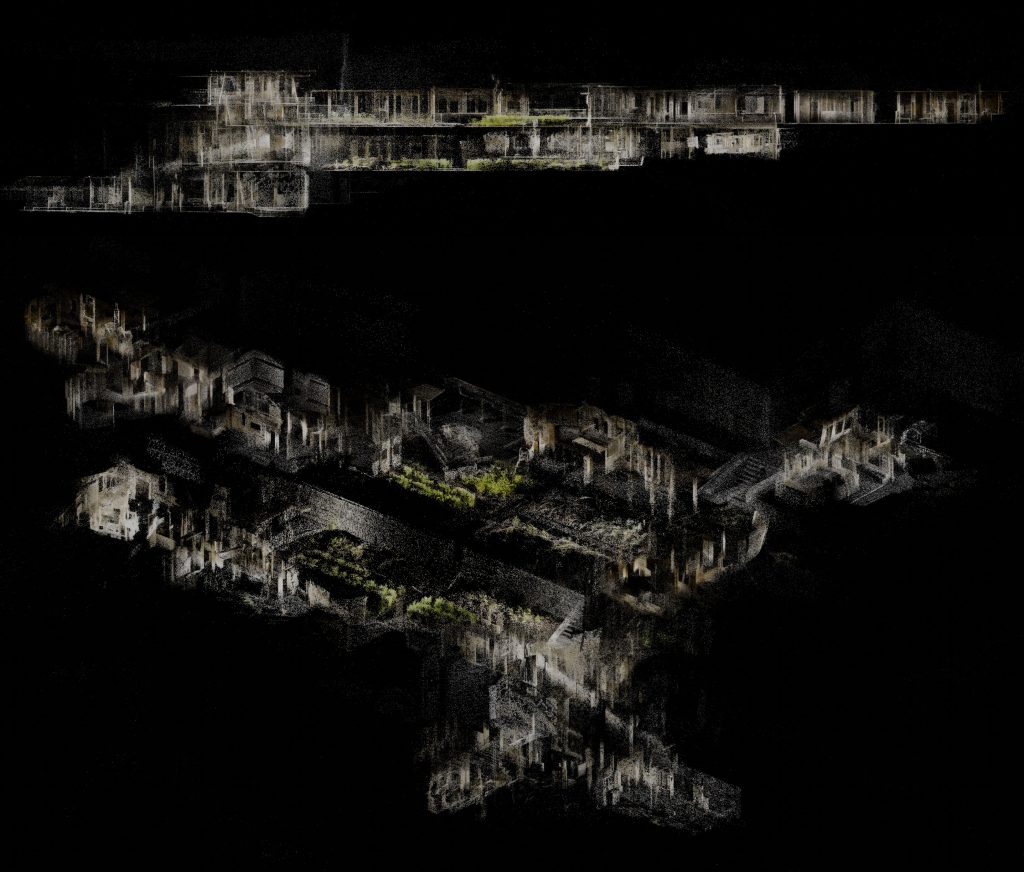
Re-imagining the Masterplan After the building is fully realized, it is then re-processed through the original SfM scripts that provided the data to generate the structure’s orientation, breaking the spatial sequence and allowing the building to exist as imagined, seen space. |